
English 

Views: 0 Author: Site Editor Publish Time: 2026-07-23 Origin: Site


Anyone who packs meals for a commute knows the frustration of a failed container. You open your bag to find ruined documents, stained fabric, and spilled liquids, all because a container marketed as spill-resistant could not handle the journey. Standard food storage often relies on friction-fit lids that simply rest against the rim. While they might hold solid foods upright on a kitchen counter, they fail mechanically the moment they are jostled, inverted, or subjected to temperature changes.
The difference between a container that merely holds food and one that actively protects it comes down to precise engineering. A genuine seal requires a compressible barrier, continuous lid tension, and materials capable of withstanding thermal stress without warping. Before trusting your meals to any storage system, you must evaluate its specific components. Understanding the glass type, gasket material, and latch mechanisms is essential to determine if a container will actually perform under pressure.
Seal Mechanics: A true leak-proof seal requires a compressible barrier (typically a silicone gasket) between two rigid materials; glass-on-glass or glass-on-metal alone cannot prevent liquid escape.
Lid Tension: The effectiveness of leak proof glass containers relies heavily on the continuous, even pressure applied by the lid's locking mechanism.
Thermal Realities: Temperature fluctuations (e.g., moving from a fridge to a microwave) can compromise seals if the container lacks proper venting or utilizes materials prone to warping.
Maintenance Dependency: Long-term leak prevention requires removable, cleanable gaskets to prevent mold growth and material degradation.
Many consumers mistake a tight-fitting plastic lid for a secure seal. Friction-fit lids rely entirely on the plastic gripping the outer edge of the glass base. However, both rigid plastic and glass feature microscopic surface variations. When you press a hard plastic lid onto a glass rim, tiny gaps remain. Low-viscosity liquids like salad dressings, broths, and marinades easily navigate these microscopic channels. The moment the container tilts in a backpack, gravity and movement force the liquid through the gaps, resulting in immediate spills. We see this constantly in field environments where gear gets thrown into trucks; a friction lid pops off the second it hits a bump.
To understand why friction fails, look at the mechanics of rigid materials. Without a flexible intermediary, two hard surfaces will never sit perfectly flush. Even if they appear tight to the naked eye, fluid dynamics dictate that liquids will find the path of least resistance. This is why snap-on lids work for dry goods like crackers but fail miserably for soups. You need a mechanical intervention to block those micro-channels.
To stop liquid from escaping, you need an interface material that fills the microscopic voids between the lid and the base. This is the primary function of silicone and rubber gaskets. When compressed, the gasket deforms to match the exact topography of the glass rim, creating an impermeable barrier. The integrity of this barrier depends on the Shore hardness (durometer) of the silicone. If the gasket is too hard, it will not compress adequately. If it is too soft, it degrades quickly under pressure. The thickness and elasticity of the ring dictate how well the seal holds up when the container is shaken or dropped.
In practical application, a high-quality gasket acts like an O-ring in plumbing. It requires specific compression ratios to function. When you lock down a lid, you are actively squishing that silicone flat against the glass. This active compression is what stops a vinaigrette from leaking all over your car seat. The gasket must also rebound to its original shape after the lid is removed, which is why medical-grade silicone is preferred over cheap rubber that flattens out permanently after a few uses.
Airtight silicone seals do more than keep liquids inside; they also control the internal environment. When a container lacks a proper seal, ambient air enters, causing moisture transfer. This leads to condensation, or sweating, inside the container, which turns crisp vegetables soggy. Strict seal integrity preserves food freshness by blocking oxygen exposure. Oxygen-sensitive items like cut fruits, leafy greens, and cheeses degrade rapidly when exposed to air. By maintaining an airtight environment, high-quality containers significantly extend the shelf life of your prepped meals.
Consider the mechanics of oxidation. An apple slice turns brown because of exposure to ambient air. A proper seal halts this process by locking out new oxygen. Furthermore, preventing moisture escape keeps meats from drying out in the fridge. The seal acts as an environmental barrier, isolating your food from the fluctuating humidity and odors of a shared office refrigerator.
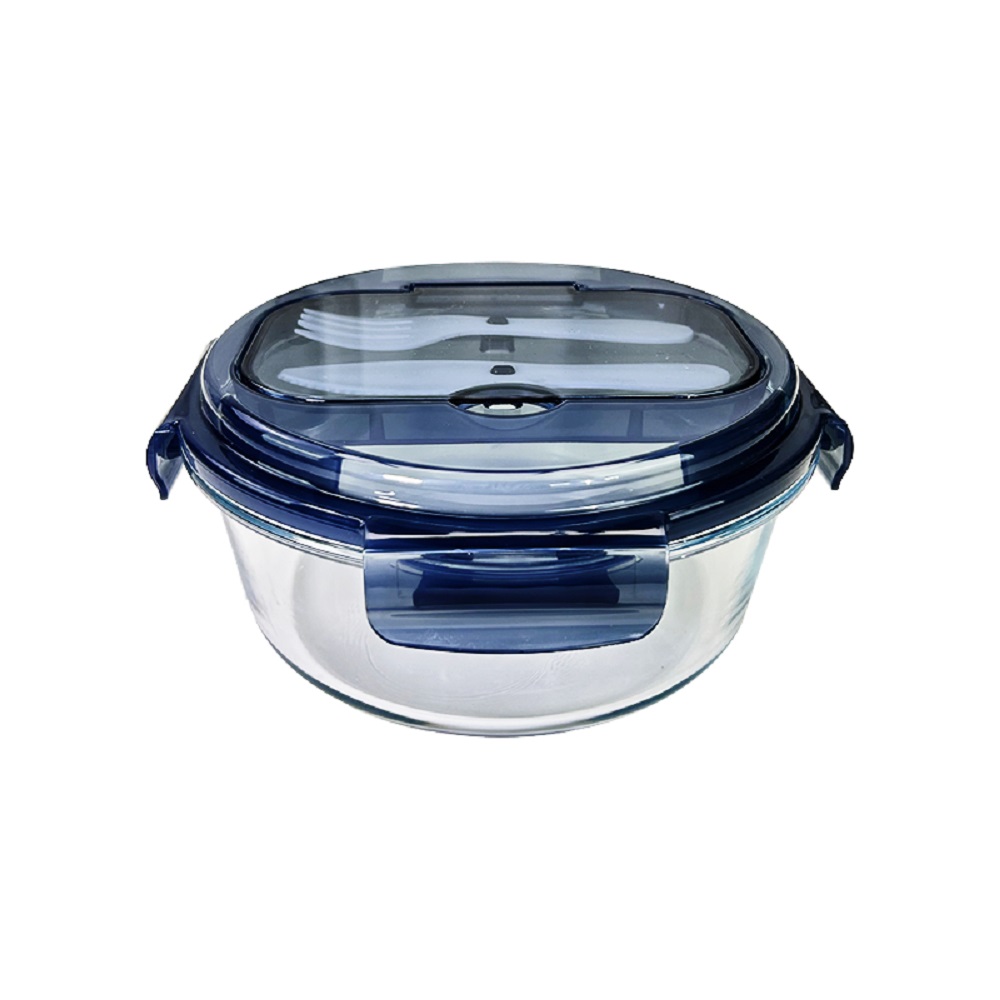
The foundation of any reliable storage system is the glass itself. Borosilicate glass is engineered with a low coefficient of thermal expansion. This means it resists expanding and contracting when exposed to rapid temperature changes. Because the glass remains dimensionally stable, the rim does not warp, ensuring the lid always fits perfectly. Standard tempered glass, while highly resistant to blunt force impact, expands and contracts more noticeably under thermal stress. Over time, this slight warping can compromise the seal.
When you pull a container from a freezing truck and throw it straight into a microwave, the material undergoes massive thermal shock. Borosilicate handles this because it contains boron trioxide, which alters the atomic structure to prevent shattering. Tempered glass, on the other hand, is just standard glass cooled rapidly to create surface tension. It is tough against drops but vulnerable to temperature swings. For a seal to remain intact over years of use, the rim must remain perfectly flat. Borosilicate guarantees this dimensional stability.
Feature | Borosilicate Glass | Tempered Glass |
|---|---|---|
Thermal Expansion | Very Low | Moderate |
Thermal Shock Resistance | Excellent (Freezer to Oven) | Good (Requires gradual changes) |
Impact Resistance | Moderate | High |
Seal Integrity Risk | Minimal warping over time | Higher risk of rim distortion |
A gasket is useless without consistent downward pressure. The industry standard 4-hinge locking system excels because it distributes pressure evenly across all four sides of the gasket. When you snap the hinges down, they pull the lid tight against the glass rim, compressing the silicone uniformly. Conversely, traditional snap-fit lids without hinges rely on the plastic's flexibility to hold tension. These lids suffer from mechanical fatigue. Repeated stretching over the glass rim causes the plastic to weaken, resulting in uneven tension and eventual leaks.
Think of the 4-hinge system like torquing lug nuts on a tire. You need even pressure on all sides to prevent a blowout. If one hinge is weaker than the others, the gasket on that side will not compress fully, creating a leak path. High-quality Leak Proof Glass Food Containers utilize reinforced hinges that maintain their clamping force even after thousands of open-and-close cycles. The mechanical advantage provided by the hinge cam ensures maximum compression with minimal user effort.
There is a growing demand for minimalist designs that omit bulky hinges. Evaluating smooth lid glass containers requires looking at alternative sealing mechanics. To achieve a leak-proof state without mechanical latches, these containers utilize vacuum-seal technology or push-down silicone mechanisms. By pressing the center of the lid or engaging a built-in valve, air is expelled from the container. The resulting internal vacuum pulls the lid tightly against the gasket, utilizing atmospheric pressure rather than mechanical hinges to maintain the seal.
This vacuum approach is highly effective for specific use cases. When you push the air out, the external atmospheric pressure acts as an invisible clamp, holding the lid down with surprising force. However, this system requires a pristine gasket and a perfectly flat glass rim. Any debris on the seal will break the vacuum, causing the lid to pop off. These designs are excellent for office environments where aesthetics matter, but they require more careful handling than heavy-duty hinged models.
Commuters need storage that balances volume with weight. Glass is inherently heavy, so structural design plays a massive role in portability. A well-designed stackable glass lunch box minimizes wasted space in a backpack or tote. The lids feature recessed channels that lock into the base of the container above them. This prevents tipping during transit. Maintaining structural stability inside a bag ensures the containers remain upright, reducing the sustained liquid pressure against the gasket.
When packing gear for a job site or a long commute, space is at a premium. Containers that slide around or tip over are a liability. Stackable designs interlock, creating a rigid column that resists lateral movement. This mechanical interlocking is crucial. If a container tips, the liquid inside constantly pushes against the gasket. While a good seal will hold, keeping the container upright adds a layer of safety and prevents messy lid situations when you finally open it to eat.
True utility requires containers to move seamlessly between extreme environments. High-quality leak proof glass containers must endure the freezer, oven, microwave, and dishwasher without glass fatigue. Rapid temperature swings affect materials differently. While borosilicate glass handles the shock, silicone gaskets expand and contract at different rates. If a container is moved directly from a sub-zero freezer to a hot environment, the gasket must retain its elasticity to keep the seal intact as the internal pressure changes.
The ability to prep, freeze, heat, and eat from a single vessel reduces cleanup and streamlines meal management. But this puts immense strain on the materials. When freezing, liquids expand, pushing outward against the glass. When heating, steam creates internal pressure. The container must be engineered to handle both extremes. This is why cheap glass shatters and cheap plastic warps. Investing in high-grade materials ensures the container survives the daily abuse of multi-environment transitions.
Heating sealed containers creates internal steam pressure. If this pressure cannot escape, it will forcefully blow out the gasket or permanently warp the lid. Steam-release valves or vented lids are critical components. By opening a small vent, you allow food to steam and warm quickly in the microwave without removing the lid entirely. This prevents splatters while protecting the structural integrity of the main silicone seal from catastrophic pressure buildup.
Operating a microwave without a vented lid is a recipe for disaster. The expanding steam acts like a bomb, seeking the weakest point to escape. Usually, this is the gasket. Once a gasket is blown out by steam pressure, it rarely seats correctly again, permanently ruining the leak-proof rating. A simple silicone vent valve solves this by providing a controlled exhaust port, regulating internal pressure while keeping the microwave clean.
Many consumers actively seek 100% plastic-free food storage to avoid chemical exposure. However, achieving a leak-proof state without plastic requires heavy engineering. You must use glass lids secured by heavy metal clamps, paired with thick silicone rings. Glass-on-glass interfaces cannot seal themselves. An interface material remains mandatory to prevent structural failure and liquid escape. This setup drastically increases the overall weight and upfront expense of the container, making it less ideal for daily commuting despite its environmental benefits.
We see this in heavy-duty canning jars. They use a glass lid, a rubber ring, and a steel wire bail. It works perfectly, but it is heavy and cumbersome. For a lunch box, carrying thick glass lids and metal hardware adds unnecessary weight to a backpack. The trade-off for eliminating plastic entirely is a significant reduction in portability and convenience. You have to decide if the environmental benefit outweighs the physical burden of carrying heavy hardware every day.
Professional kitchens favor high-purity glass and medical-grade silicone over standard plastics. These materials offer superior chemical leaching resistance, ensuring no unwanted flavors or toxins transfer into hot food. Furthermore, high-grade silicone boasts excellent stain resistance and odor-free longevity. If you prep heavily spiced meals or acidic tomato sauces, inferior plastics will stain and hold smells permanently. Non-toxic, food-safe silicone gaskets maintain their structural integrity and neutrality over hundreds of wash cycles.
In a commercial setting, equipment gets abused. It goes through high-temp commercial dishwashers and holds aggressive ingredients like raw garlic and citrus. Cheap plastic absorbs these odors, ruining the flavor of whatever is stored next. Glass and high-grade silicone are non-porous. They wipe clean and reset to neutral, ensuring your meal tastes exactly as intended, without the ghost flavors of last week's curry.
There is a constant trade-off between weight and durability in glass storage. Thick, shatter-resistant glass is highly durable but incredibly heavy, making it better suited for stationary pantry or fridge storage. Thinner glass is lighter and much easier for daily transit. However, thinner glass carries a higher risk of chipping along the rim. Even a microscopic chip on the glass rim destroys the smooth surface required for the silicone gasket to compress against, instantly ruining the container's leak-proof rating.
You have to match the tool to the job. If you are throwing a container into a tool bag in the back of a pickup, you need thick, heavy glass that can take an impact. If you are carrying it in a briefcase on a subway, thinner glass is preferable to save your shoulder. Just remember that thinner glass requires more careful handling. A single drop in the sink while washing can chip the rim, rendering the entire container useless for holding liquids.
The primary failure point of any sealed container is poor gasket maintenance. Moisture inevitably gets trapped in the narrow channel where the silicone ring sits. If left uncleaned, this trapped moisture leads to black mold growth. Evaluating hygiene requires looking at how the gasket is installed. Easily removable gaskets allow for thorough cleaning and drying, though they require manual effort to reinstall. Permanently integrated silicone seals (co-molded lids) eliminate the risk of trapped moisture behind the gasket, but if the silicone tears, the entire lid must be discarded.
Maintenance is non-negotiable. You cannot just throw a sealed lid in the dishwasher and expect it to get clean. Food particles and dirty water get forced behind the gasket during the wash cycle. If you do not pull that gasket out and scrub the channel, you are cultivating a science experiment. A simple pick tool or a butter knife is all you need to pop the gasket out for proper sanitation.
While glass bases handle dishwashers effortlessly, lids require careful attention. High-heat dishwasher cycles, particularly the bottom rack drying phase, warp plastic lids over time. Even a millimeter of warping reduces the tension required for the hinges to compress the gasket properly. To extend the lifespan of your containers, always hand-wash the lids or place them exclusively on the top rack away from the heating element.
The heating coil at the bottom of a dishwasher gets hot enough to melt thin plastics. Even heavy-duty lids will soften and warp if placed too close. Once a lid warps, the hinges no longer align perfectly with the glass rim. The tension becomes uneven, and the seal fails. Taking an extra sixty seconds to hand-wash the lid guarantees the mechanical integrity of the locking system for years.
A container is only as leak-proof as the sum of its parts: the compressible gasket, the dimensional stability of the glass, and the continuous tension of the latching mechanism. Standard friction-fit lids will always fail under transit conditions. For heavy-duty liquid transport and high thermal versatility, 4-hinge borosilicate models remain the most reliable choice. For dry-goods, office commutes, or aesthetic-focused storage, vacuum-sealed smooth lids offer excellent performance without the bulk of hinges.
Audit your weekly meal-prep habits to determine if you primarily transport liquids or solid foods.
Assess your commute style to decide if the weight of thick glass is manageable or if lighter, stackable designs are necessary.
Check your workplace heating options to ensure your chosen containers have the appropriate venting systems for microwave use.
Establish a strict hand-washing routine for all plastic lids and silicone gaskets to prevent heat warping and mold growth.
A: Yes, but with caution. Liquids expand as they freeze. If you fill a sealed glass container to the brim with soup and freeze it, the expanding liquid will shatter the glass or blow out the lid's seal. Always leave at least an inch of headspace at the top of the container to accommodate expansion.
A: Remove the ring using a blunt tool, like the handle of a spoon or a butter knife, to avoid puncturing the silicone. Wash the ring and the lid channel with warm, soapy water. Allow both components to air dry completely before reinstalling the gasket to prevent mold growth.
A: It depends on the mechanism. Vacuum-sealed smooth lids, which use a valve to expel air and create internal pressure, are highly leak-proof. Basic friction-fit smooth lids without a vacuum mechanism or thick silicone gasket are generally not leak-proof and will spill if inverted.
A: Containers with a proper silicone gasket and a 4-hinge locking system or vacuum seal will not leak when inverted. The inversion test is the standard method for proving seal integrity. If a container relies only on plastic-to-glass friction, it will fail this test.
A: With regular use and proper maintenance, a high-quality silicone seal typically lasts between 1 to 3 years. Frequent exposure to high-heat dishwasher cycles, aggressive scrubbing, or highly acidic foods can degrade the silicone faster, causing it to harden, shrink, and eventually leak.


