
English 

Views: 0 Author: Site Editor Publish Time: 2026-08-02 Origin: Site


The functional difference between "spill-proof" and genuinely "airtight" dictates the shelf life, safety, and quality of stored food. Standard storage solutions often rely on imprecise friction fits that allow micro-leaks. These invisible gaps lead to accelerated oxidation, rapid moisture loss, and the cross-contamination of pungent odors across different foods. Resolving these persistent storage failures requires moving beyond basic plastics to engineered glass seal containers. Creating a verifiable, long-lasting environmental barrier depends entirely on material rigidity and specialized gasket systems. Unlike flexible materials that warp under thermal stress, rigid glass maintains a perfectly flat mating surface. When paired with high-compression closures, this structural stability transforms a simple bowl into a highly controlled micro-environment. This extends food viability and prevents physical leaks during transit.
Seal Integrity Relies on Two Components: A true airtight seal requires both a high-grade, compressible silicone gasket and a rigid, unyielding container rim.
Glass Quality Dictates Seal Longevity: Borosilicate glass resists thermal expansion, contraction, and mechanical stress better than soda-lime glass, preventing micro-warping that compromises the seal over time.
Vacuum Technology Extends Preservation: Negative pressure glass containers actively remove ambient air, significantly reducing oxidation rates compared to standard locking lids.
Maintenance is Non-Negotiable: Even the highest-quality seals require proper gasket maintenance to prevent bacterial buildup and material degradation.
Defining the success criteria for an airtight environment requires looking at three distinct physical barriers. First, the container must achieve zero liquid leakage. Dynamic movement and inversion should never force fluids past the seal. Second, it must halt gas exchange. Ambient oxygen fuels enzymatic browning and bacterial growth, while escaping moisture causes freezer burn and staling. Third, the system requires a secure mechanical closure that applies uniform downward pressure across the entire perimeter of the lid. If any of these three elements fail, the container acts as a simple dust cover rather than an active preservation tool. Real-world kitchen environments expose containers to rapid temperature swings, physical impacts, and aggressive cleaning chemicals. A true seal must withstand all these factors without degrading.
The primary environmental barrier in any high-quality storage vessel is the gasket. Food-grade silicone vastly outperforms traditional rubber or plasticized gaskets. Silicone maintains its elasticity across extreme temperature ranges. It will not become brittle in a deep freezer or melt during a high-heat dishwasher cycle. When the lid engages, the silicone compresses against the glass rim. This compression ratio fills microscopic imperfections in the glass surface, physically blocking air and liquid molecules.
Manufacturers approach gasket design in two distinct ways: removable rings and over-molded seals. Removable gaskets prioritize hygiene. You can extract them with a dull tool to scrub away trapped food particles and moisture, preventing black mold from taking root in the lid channel. Over-molded gaskets fuse the silicone directly to the plastic lid. While this offers convenience by eliminating the need for disassembly, it often creates tight crevices where bacteria can accumulate unseen over time. For long-term food safety, removable gaskets remain the superior choice.
The method used to compress the gasket determines the reliability of the seal. The 4-hinge snap-locking lid remains the industry standard for uniform downward pressure. By anchoring the lid on all four sides, the mechanism forces the silicone deep into the glass rim. This creates a highly resilient barrier against both internal pressure changes and external impacts.
Simple push-down friction lids rely entirely on the tight fit of the silicone against the inner wall of the glass. While visually sleek, these lids fail frequently in fluctuating temperatures. Cold environments cause the air inside the container to contract, pulling the lid down. As the food warms, expanding air pushes the friction lid upward, breaking the seal entirely. For a highly durable alternative to plastic locking mechanisms, stainless steel lids equipped with integrated silicone rings and adjustable pressure buttons provide a premium closure that withstands decades of mechanical wear.
Closure Mechanism Comparison
Mechanism Type | Compression Uniformity | Temperature Resilience | Failure Risk |
|---|---|---|---|
4-Hinge Snap Lock | High (Even pressure on all sides) | Excellent | Hinge fatigue over years of use |
Push-Down Friction | Low (Relies on sidewall contact) | Poor (Pops off when warm) | Loss of seal during temperature shifts |
Stainless Steel Clamp | Maximum (Heavy mechanical force) | Excellent | Gasket pinching if misaligned |
Standard airtight containers trap a volume of ambient air inside with the food. negative pressure glass containers solve this by actively extracting that air. Utilizing vacuum-pump systems and one-way silicone valves, these containers pull oxygen out of the storage chamber. The resulting vacuum pulls the lid down with immense atmospheric pressure. This creates an unbreakable seal while simultaneously starving aerobic bacteria of the oxygen they need to multiply.
This technology serves specific, high-value use cases in the kitchen. Certain foods degrade rapidly when exposed to standard atmospheric conditions. Implementing vacuum storage yields immediate results for these items:
Roasted coffee beans: Prevents volatile flavor oils from oxidizing and turning rancid.
Cut avocados and apples: Halts the enzymatic browning process almost entirely.
Fresh berries: Extends shelf life by preventing mold spores from accessing oxygen.
Cured meats and cheeses: Stops the surface from drying out and hardening in the refrigerator.
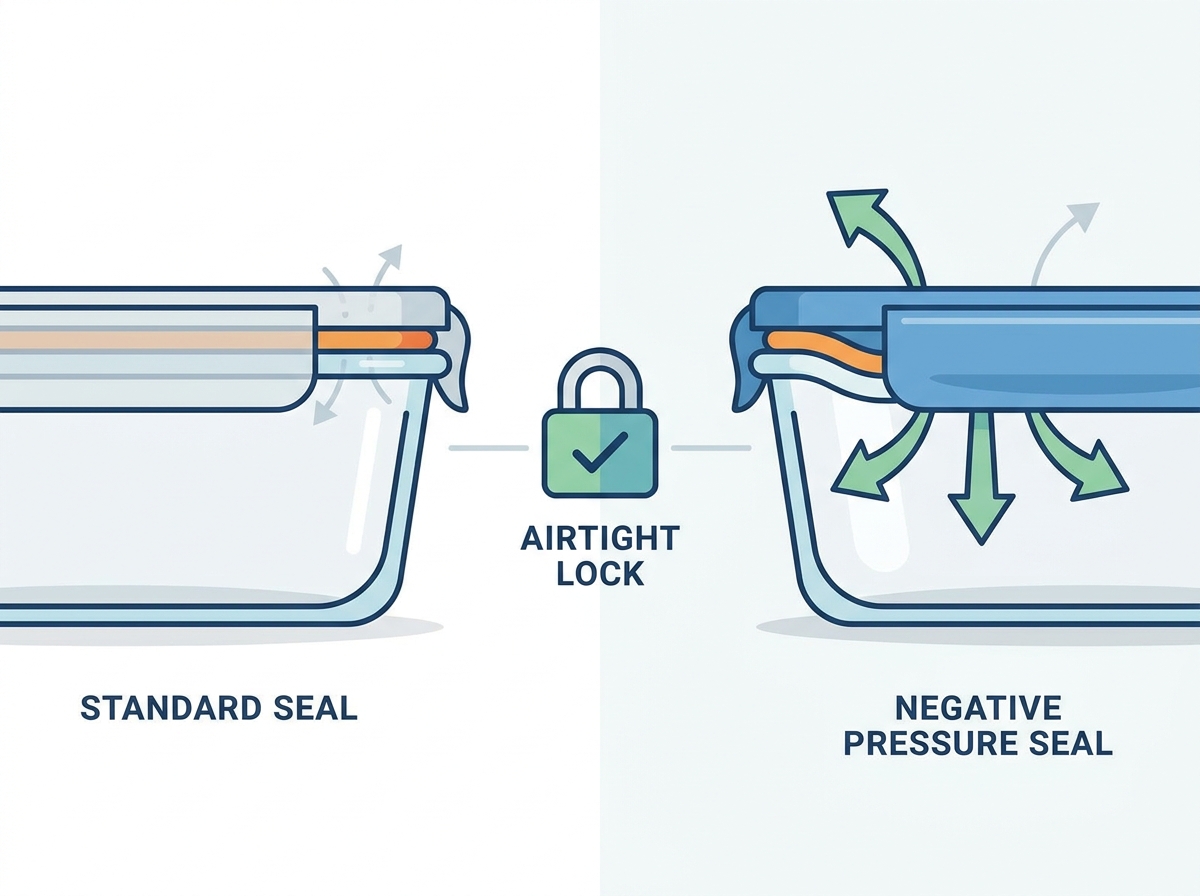
The inflexibility of glass provides a massive mechanical advantage over plastic alternatives. Plastic containers warp under the stress of hot food, dishwasher cycles, and microwave radiation. Once the rim of a plastic container bows even a fraction of a millimeter, the silicone gasket can no longer make flush contact. The airtight seal is permanently destroyed. Glass remains rigid. Its structural integrity ensures that the mating surface stays perfectly flat, allowing the gasket to perform its job flawlessly year after year.
Evaluating the manufacturing tolerances of the glass rim reveals why some containers leak while others hold tight. A highly polished, perfectly level rim is essential for a true seal. smooth lid glass containers take this engineering a step further. In these designs, the lid itself is crafted from tempered glass and paired with a thick silicone ring. This configuration eliminates plastic entirely from the storage environment.
By using a glass-on-glass approach separated only by medical-grade silicone, you ensure zero chemical leaching into your food. The flush mating surface created by two perfectly rigid glass components guarantees a level of chemical inertness and seal reliability that hybrid plastic-and-glass containers struggle to match over long periods of heavy use. You never have to worry about a plastic lid absorbing pasta sauce stains or retaining the smell of chopped onions.
Not all glass performs equally in a kitchen environment. Borosilicate glass contains boron trioxide, which fundamentally alters how the material reacts to temperature changes. It boasts exceptional thermal shock resistance. You can move a borosilicate container directly from a freezing environment into a hot oven without shattering. This stability also means the glass does not expand or contract significantly, keeping the airtight seal intact during rapid temperature shifts.
Soda-lime glass lacks this resilience. It is highly susceptible to thermal shock and can shatter if subjected to sudden temperature changes. Furthermore, its mechanical strength under stress is lower. Edge-chipping is common with soda-lime glass, and a single chip on the rim instantly destroys the airtight mating surface. The superior durability of borosilicate prevents this physical degradation, securing the container's functionality for the long term.
Glass Type Specifications
Feature | Borosilicate Glass | Soda-Lime Glass |
|---|---|---|
Thermal Shock Resistance | Excellent (Freezer to Oven safe) | Poor (Prone to shattering) |
Surface Hardness & Rim Integrity | High (Resists chipping) | Moderate (Chips easily) |
Odor & Stain Resistance | Complete (Non-porous) | Complete (Non-porous) |
Seal Longevity Under Stress | Maximum (Zero warping) | High (If unchipped) |
Translating a mechanical seal into practical kitchen outcomes means looking directly at food preservation. A highly compressed silicone barrier slows enzymatic browning by restricting the flow of fresh oxygen into the container. In the freezer, this same barrier prevents the sublimation of ice crystals, effectively stopping freezer burn before it starts. High-quality glass seal containers lock the internal humidity in place, keeping baked goods soft and leafy greens crisp.
An airtight seal drastically slows degradation and moisture loss, but it does not stop intrinsic food spoilage. Anaerobic bacteria can still multiply, and natural cellular breakdown will continue. The goal of the seal is to control the external environment, buying you significant time and maintaining texture, rather than acting as a permanent stasis chamber.
Carrying soups, dressings, or marinades requires absolute confidence in the container's leak-proofing. A true airtight seal will not release a single drop during transit. The success of this dynamic testing relies heavily on the depth of the silicone channel in the lid. Shallow channels allow the silicone gasket to roll or slip when subjected to the lateral force of sloshing liquids. Deep, precisely engineered channels hold the gasket firmly in place, ensuring that the compression against the glass rim remains constant regardless of the container's orientation.
To verify the integrity of your containers before throwing them into a bag, run through a quick testing protocol:
The Inversion Test: Fill the container halfway with water, lock the lid, and hold it upside down over the sink for ten seconds.
The Agitation Test: Shake the inverted container vigorously to simulate the movement of a backpack or cooler.
The Squeeze Test: Press down firmly on the center of the lid. Listen for any hissing sounds that indicate air escaping past the gasket.
Glass is entirely non-porous. This physical characteristic prevents the absorption of volatile organic compounds from pungent foods like raw onions, garlic, or curries. You can store a highly aromatic dish for a week, wash the glass, and immediately use it for delicate fruits without any flavor transfer.
Glass demonstrates absolute non-reactivity to high-acid foods. Tomato sauces, citrus marinades, and vinegar-based dressings will slowly pit, stain, and degrade plastic containers over time, eventually compromising their structural integrity. Glass remains unaffected. To maintain this inert environment, ensure the lid material matches the qualities of the glass base. Utilizing glass lids or high-grade stainless steel closures prevents acidic condensation from breaking down plastic lid components.
The primary physical penalty of transitioning to thick-walled glass is the weight. Glass is heavy, making large containers cumbersome to transport for daily commuting. Additionally, the storage footprint requires careful management. Unlike thin plastics that nest deeply into one another, glass containers often feature thicker bases and less extreme tapers, limiting their nesting capabilities.
To maximize spatial efficiency, prioritize modular stacking systems. Containers designed with recessed lids allow secure vertical stacking in the refrigerator, preventing avalanches. Standardizing on a single brand that offers universal lid sizes across varying container depths is a critical strategy. This minimizes storage clutter and eliminates the daily frustration of hunting for the specific lid that matches a unique container footprint.
The longevity of an airtight system depends entirely on gasket maintenance. Deep gasket channels, while excellent for leak-proofing, present a significant risk of mold development if neglected. Moisture trapped behind the silicone ring creates an ideal breeding ground for bacteria. Routine maintenance requires a specific cleaning protocol to keep the seal functioning properly.
Extraction: Use a dull implement like a butter knife to gently pry the silicone ring out of the lid channel without puncturing it.
Agitation: Wash the gasket and the lid separately in warm, soapy water to remove trapped oils and food particles.
Air Drying: Allow both components to dry completely on a rack. Trapping residual moisture during reassembly invites mold growth.
Re-seating: Press the gasket firmly back into the channel, ensuring it sits flat without any twists or bulges.
While silicone is highly heat resistant, subjecting it to repeated high-heat drying cycles in the bottom rack of a dishwasher can eventually compromise its elasticity. Hand washing the lids or placing them strictly on the top rack extends the lifespan of the seal significantly.
A common point of failure occurs when users misunderstand thermal limits. While a borosilicate glass base is fully oven-safe and microwave-safe, the airtight lids rarely are. Plastic hinges warp, integrated vacuum valves melt, and silicone gaskets degrade when exposed to direct microwave radiation or oven heat.
If you must microwave with a lid to prevent splattering, best practices dictate extreme caution. Never microwave a sealed container. The rapid expansion of steam will cause a pressure explosion, shattering the glass or blowing the lid off violently. Always unlatch the hinges and rest the lid loosely on top to vent steam. For a safer, practical workaround, utilize secondary, microwave-safe silicone stretch lids for reheating. This protects your primary airtight locking lids from heat damage, ensuring they remain perfectly flat and functional for storage.
Audit your current storage inventory and immediately discard any warped lids or permanently stained plastics that can no longer hold a reliable seal.
Standardize on a single brand's ecosystem to ensure lid interchangeability, drastically reducing cabinet clutter and streamlining your meal prep workflow.
Implement a strict cleaning protocol that involves removing and fully drying silicone gaskets weekly to prevent mold and maintain maximum elasticity.
Test your existing seals by filling containers with water, locking the lids, and inverting them over a sink to identify hidden micro-leaks.
A: Yes. Because glass does not warp over time, react to acidic foods, or absorb odors, the mating surface remains perfectly flat, ensuring the silicone gasket maintains a true airtight seal longer than flexible plastic containers.
A: These are specialized containers equipped with a one-way valve and a manual or electronic pump. They allow you to extract the air from inside the container, creating a vacuum that drastically slows oxidation and bacterial growth.
A: Typically, yes. Smooth lid glass containers utilize a tempered glass lid paired with a removable silicone gasket, eliminating plastic components entirely while still achieving an airtight friction seal.
A: The glass base is generally freezer-safe, especially if made of borosilicate glass. However, liquids expand when frozen; you must leave adequate headspace to prevent the glass from shattering or the airtight seal from failing under internal pressure.
A: To maintain the airtight integrity, remove the silicone gasket using a dull tool (like a butter knife), wash it with warm soapy water, and allow both the gasket and the lid channel to dry completely before reassembly to prevent mold.
A: Seal failure is rarely due to the glass. It is almost always caused by a degraded, stretched, or missing silicone gasket, or a cracked plastic locking hinge that can no longer apply uniform downward pressure.


