
English 

Views: 0 Author: Site Editor Publish Time: 2026-08-27 Origin: Site


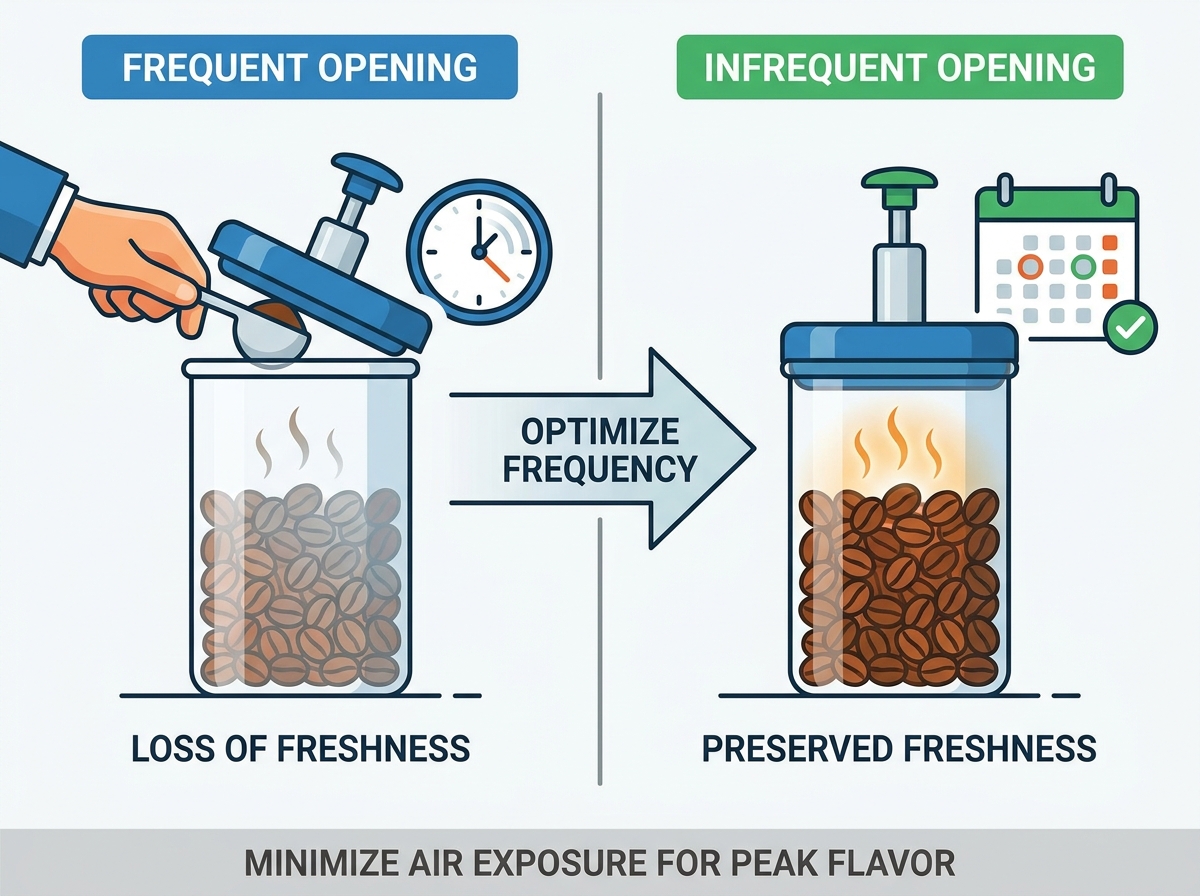
Specialty coffee presents a daily paradox. You invest in premium, freshly roasted beans to experience complex flavor profiles, only to accelerate their degradation by exposing them to ambient air every morning. The chemical realities of coffee staling are unforgiving. While airtight environments slow oxidation, the physical act of repeatedly opening a container replenishes oxygen and introduces humidity. Every time you remove the lid, you effectively reset the staling clock.
Managing your reopening frequency is just as critical as the storage vessel you select. Even the most advanced storage technology cannot compensate for poor usage habits. This guide explores the mechanics of coffee degradation and provides a technical framework for optimizing your storage routine. We evaluate whether a dedicated vacuum storage system aligns with your daily brewing realities and how to structure your workflow to preserve delicate aromatics.
The Reopening Threshold: Opening a primary storage container more than once a day significantly degrades beans; optimal practice involves opening bulk storage no more than once every 3 to 5 days.
The "Magic Time" Window: Peak flavor for most roasts occurs between 4 and 14 days post-roast, though espresso may peak earlier (2–5 days). Vacuum technology preserves this window and can extend acceptable freshness up to a month or more, but it does not pause time indefinitely.
Strategic Batching: The most effective freshness strategy utilizes a dual-container system: a large coffee bean vacuum canister for bulk holding and a smaller, standard airtight container for daily dosing.
Hardware Matters: The effectiveness of a storage system relies heavily on the mechanism—whether an integrated push-button seal or a manual vacuum pump—and its ability to actively remove oxygen rather than just trap it.
To establish a successful storage strategy, we first define what constitutes true freshness. Fresh roasted coffee retains volatile aromatics, maintains proper carbon dioxide degassing levels, and exhibits zero lipid oxidation. A functional storage protocol must actively mitigate these three distinct degradation pathways. When you fail to control these variables, cup quality drops dramatically, resulting in flat, bitter, or sour extractions.
An immediate chemical reaction occurs the moment ambient air enters a previously sealed environment. Roasted coffee beans are coated in delicate surface oils, particularly in darker roasts where the cellular structure has expanded enough to push lipids to the surface. These oils carry the primary flavor compounds that dictate the tasting notes of your brew. When oxygen makes contact with these lipids, an oxidation process begins. This reaction breaks down the molecular structure of the oils, producing rancid and stale flavors.
Every single reopening introduces a fresh supply of oxygen. If you open a jar to scoop out beans, you displace the protective environment. You replace it with a 21% oxygen atmosphere. The beans immediately begin reacting with this new oxygen load. Over a week of daily openings, the cumulative oxidation strips the coffee of its origin characteristics. The bright, fruity acids degrade into dull, woody notes, and the rich chocolate undertones become ashy.
Coffee beans are inherently hygroscopic. They actively absorb moisture from the surrounding air. Kitchens are dynamic environments with constantly shifting humidity levels due to cooking, boiling water, and dishwashing. When you open a container in a humid kitchen, moisture-laden air rushes in.
This daily reopening introduces micro-condensation on the surface of the beans. Moisture accelerates the breakdown of complex carbohydrates and proteins within the cellular structure of the coffee. This degradation happens significantly faster than oxygen-driven staling alone. Temperature fluctuations further compound this issue. Storing a canister near an oven or a sunny window causes the internal temperature to spike, forcing the beans to sweat and reabsorb tainted moisture when the temperature drops again.
Roasting coffee creates trapped carbon dioxide within the bean structure. This CO2 releases slowly over time in a process called degassing. The critical window for filter coffees usually lands between 4 and 14 days post-roast. This is the "magic time" for peak flavor. Espresso roasts often peak slightly earlier, typically in the 2 to 5-day window, depending on the roast depth and bean density.
Trapping this escaping CO2 without a release mechanism negatively impacts flavor. The pressure buildup can force CO2 back into the beans, creating harsh, carbonic acid notes during extraction. Frequent reopening disrupts the delicate degassing equilibrium. You lose the protective blanket of CO2 that naturally pushes oxygen away from the beans. Maintaining a stable environment during this peak period requires precise control over pressure and gas exchange.
A successful coffee routine balances the theoretical ideal of never opening the container with the practical reality of needing beans to brew your morning cup. You must align your storage hardware with your actual consumption rate to see any tangible benefit.
Opening a canister one or two times daily severely impacts longevity. For daily access, active air removal is strictly necessary. You must extract the ambient air introduced during each opening to mitigate the constant influx of oxygen. Without active extraction, you are simply storing beans in a sealed box of stale air.
Contrast this with the weekend-only brewer. If beans sit undisturbed for five days at a time, vacuum storage becomes highly effective. The environment remains stable, preserving delicate aromatics and slowing the lipid oxidation process to a crawl. The less frequently you break the seal, the longer the origin characteristics survive.
The most effective method for preserving freshness is the dual-vessel framework. You keep the vast majority of your freshly roasted beans in a primary coffee bean vacuum canister. You only open this master container once a week.
To execute this strategy properly, follow these specific workflow steps:
Weigh your total weekly coffee consumption based on your standard brewing recipe.
Allocate a three-to-five day supply into a small, secondary airtight jar that sits on your counter.
Pour the remaining bulk supply into the primary vacuum vessel.
Seal the primary vessel and extract the air completely to establish negative pressure.
Only break the primary seal when the daily jar is completely empty.
By using this batching method, the primary batch experiences almost zero exposure to ambient kitchen air. This strategy drastically limits oxygen exchange and humidity fluctuations for the bulk of your supply. Implementing this routine can successfully extend a roast's usable freshness from the standard two weeks up to a full month or more.
The market offers countless storage solutions, but they vary wildly in structural design and mechanism of action. Understanding how these systems handle air displacement dictates whether you are making a sound hardware investment or just buying a decorative jar.
Standard silicone-gasket jars represent the baseline of coffee storage. They effectively prevent new air from entering the vessel once sealed. However, they possess a fatal flaw for daily use. They trap the existing ambient air inside with the beans every time you secure the lid. You are locking the oxygen in, allowing it to freely react with the coffee oils until the next time you open the jar. This makes them suitable only for the secondary "daily driver" role in a batching system.
Glass storage presents a conflict between aesthetic appeal and functional risk. A vacuum glass storage jar allows you to easily monitor your bean inventory without breaking the seal. You can visually inspect the roast level and remaining volume at a glance. However, clear glass introduces the severe risk of UV and light degradation. Photochemical reactions break down coffee compounds rapidly, destroying the delicate flavor notes.
If you choose glass, you must employ strict mitigation strategies. You should store glass jars exclusively inside dark cabinets or enclosed pantries. Never leave a clear glass coffee container on a sunlit countertop. The UV exposure will ruin the beans long before oxygen does.
Active extraction systems require a mechanism to pull air out of the vessel. Containers that utilize a separate or integrated manual vacuum pump offer distinct advantages over automated systems. They provide immediate tactile feedback. You can physically feel the resistance increase as the negative pressure builds, confirming a tight, secure seal.
Manual pumps boast superior durability and reliability compared to automated or battery-operated models. There are no motors to burn out, no circuit boards to short out from kitchen moisture, and no batteries to charge. The mechanical simplicity ensures consistent performance over years of daily use in a busy kitchen environment.
Buyers must assess which canister specifications actually translate to longer-lasting beans. Marketing claims often obscure the mechanical realities of how these devices function. Focus on seal integrity, material science, and appropriate sizing to ensure your investment yields better-tasting coffee.
You must distinguish between true vacuum seals and simple displacement lids. A displacement lid pushes some air out as you press it down, but it does not create negative pressure. It simply reduces the internal volume. A true vacuum system actively extracts air to create a low-pressure environment, significantly reducing the oxygen parts-per-million surrounding the beans.
Furthermore, the system requires a specialized one-way or two-way valve. This valve must allow the naturally degassing CO2 to escape the container. If the valve fails to release CO2, the pressure will build and eventually break the vacuum seal, popping the lid loose and allowing oxygen to rush back in.
Material selection dictates thermal mass and light-blocking capabilities. High thermal mass materials resist sudden temperature changes, protecting beans from kitchen heat spikes caused by nearby appliances.
Storage Material Comparison Guide
Material Type | Light Protection | Thermal Stability | Best Use Case |
|---|---|---|---|
Stainless Steel | Excellent (100% Opaque) | High | Countertop storage, high-traffic kitchens |
Ceramic | Excellent (100% Opaque) | Very High | Countertop storage, stable temperature environments |
Clear Glass | Poor (0% Protection) | Moderate | Enclosed pantries, dark cabinets only |
We strongly recommend opaque materials like stainless steel or ceramic for any countertop storage. Reserve glass exclusively for dark storage environments to prevent photo-degradation. Stainless steel also offers the added benefit of drop resistance, which is highly practical in a fast-paced morning routine.
Matching canister volume to your purchasing habits is vital. If you typically buy 12-ounce bags of specialty coffee, buying a massive two-pound canister is a mistake. This introduces the "headspace" problem.
A mostly empty large canister contains a massive volume of ambient air. It requires significantly more pumping to achieve a vacuum. This increases wear on the pump mechanism and requires more physical effort every time you seal it. Furthermore, if you fail to pump out all that excess air, you leave a large volume of oxygen in contact with a small volume of beans. Always buy a container sized closely to your standard coffee purchase volume to minimize empty headspace.
Even the best hardware fails if used incorrectly. Pervasive myths and common user errors routinely render expensive vacuum canisters completely ineffective. Understanding these risks ensures you get the maximum return on your equipment investment.
You must abandon the myth that vacuum sealing pauses time indefinitely. Beans still age; they simply do so at a decelerated rate. Vacuum storage extends the peak flavor window, but it does not grant immortality to roasted coffee. You still need to consume the beans within a reasonable timeframe.
Another critical mistake is storing daily-use beans in the refrigerator. Refrigerators are highly humid environments filled with food odors. Taking a cold container in and out of the fridge daily causes extreme condensation on the beans. The coffee will also absorb the ambient odors of your refrigerator, ruining the cup profile with notes of leftover garlic or onion.
Do not assume that a depressed button or a locked latch guarantees a vacuum seal. Gaskets fail, valves stick, and user error occurs. This creates a "false vacuum" where the container looks sealed but is actively leaking air.
You must perform routine troubleshooting to check seal integrity. Inspect the silicone gasket for tiny pieces of coffee chaff or debris. Even a microscopic coffee flake can break the seal. Listen closely to the container after pumping; a faint hissing sound indicates a leak. If the pump resistance feels unusually light, the valve likely needs cleaning or replacement.
Coffee oils are highly volatile and sticky. Over time, these oils build up on the interior walls and the silicone gaskets of your storage container. If left unchecked, this oil residue will harden, compromise the vacuum seal, and impart rancid flavors to fresh batches of beans.
Implement a strict cleaning schedule to maintain your equipment:
Wipe the interior walls with a dry microfiber cloth between every new bag of coffee.
Inspect the silicone gasket and wipe it clean of any chaff or dust.
Avoid using harsh dish detergents, as they degrade silicone gaskets rapidly and leave soapy residues that taint the coffee flavor.
If washing is absolutely necessary, use warm water, rinse thoroughly, and ensure the container is 100% bone-dry before adding new beans.
Vacuum canisters have a functional limit. If you know you will not consume a batch of beans within four to five weeks of the roast date, countertop vacuum storage is insufficient. At this duration, deep-freezing becomes the superior preservation method.
To freeze coffee properly, you must use vacuum-sealed plastic bags, not your daily-use hard canisters. Portion the beans into single-dose or weekly-dose bags, pull a hard vacuum with a dedicated sealer, and place them in the deepest part of the freezer away from the door. When you need them, let the sealed bag thaw completely to room temperature before opening it. Opening a frozen bag immediately introduces massive condensation, ruining the beans instantly.
Managing oxygen exposure dictates the lifespan of your specialty coffee. A dedicated vacuum storage system provides the mechanical advantage needed to slow lipid oxidation and preserve volatile aromatics. By utilizing a strategic batching method, you protect your primary supply from daily humidity and oxygen spikes. This workflow maximizes the return on your hardware investment and successfully extends peak freshness up to a full month.
To optimize your coffee storage routine, take the following steps:
Audit your current coffee consumption rate to determine your average weekly volume.
Select a vacuum canister capacity that closely matches your standard bag size to eliminate excess headspace.
Choose an opaque material like stainless steel if storing on the counter, or glass if storing in a dark pantry.
Implement a secondary daily-dosing jar to prevent opening your primary vacuum canister more than once a week.
A: The peak flavor window typically falls between 4 and 14 days post-roast. Vacuum storage preserves the higher end of this range by actively slowing oxidation. With proper use, minimal headspace, and infrequent opening, acceptable freshness can easily be extended up to a month.
A: No. Clear glass offers zero UV protection. Light exposure rapidly degrades coffee compounds through photochemical reactions. If you use glass storage, you must keep the container in a dark cabinet or enclosed pantry to prevent photo-degradation.
A: Manual pumps offer superior long-term reliability and tactile feedback, ensuring you know exactly when a seal is achieved. They do not rely on batteries or motors that can fail. Automatic canisters offer push-button convenience but introduce electronic failure points.
A: Never store daily-use beans in the refrigerator. The constant temperature shifts cause condensation to form on the beans, accelerating degradation. Furthermore, coffee absorbs ambient food odors easily. Keep daily beans in a cool, dark, and dry place.
A: You should wipe the silicone gasket with a dry microfiber cloth every time you switch to a new bag of coffee. This removes sticky coffee oils and chaff debris that can compromise the vacuum seal over time.
A: Opening the container multiple times daily defeats the purpose of vacuum storage. Each opening introduces fresh oxygen and ambient humidity, resetting the staling process. This is why a secondary jar is recommended for daily access.


